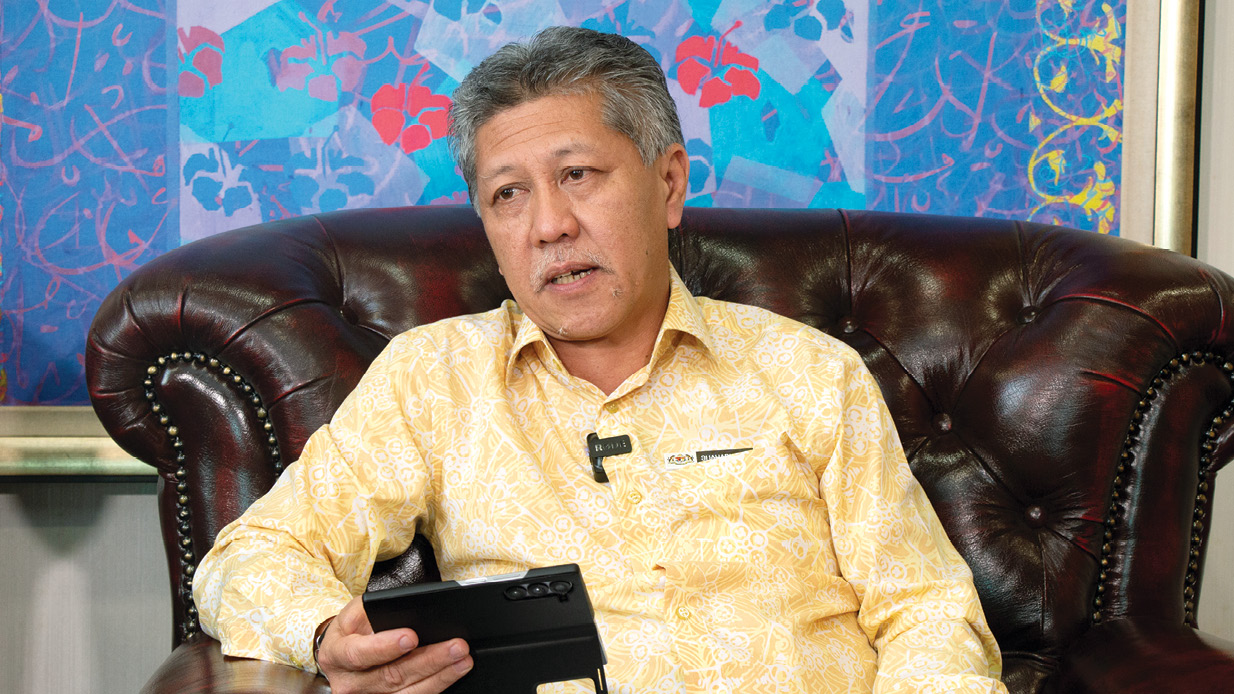
Malaysia’s tourism sector has recorded a strong start to 2025, with over 6.7 million visitor arrivals in the first two months alone. This encouraging performance reflects growing confidence in Malaysia as a preferred travel destination. Building on this momentum, the industry remains committed to delivering quality experiences that showcase the country’s diverse offerings.
According to Dato’ Shaharuddin Abu Sohot, Secretary-General of the Ministry of Tourism, Arts and Culture (MOTAC), Malaysia welcomed 38 million tourist arrivals in 2024, marking a 31.1 per cent increase from 29 million in 2023 and an 8.1 per cent rise compared to pre-pandemic levels in 2019. The country’s top ten source markets were Singapore, Indonesia, China, Thailand, Brunei, India, the Philippines, South Korea, Australia and Chinese Taipei.
“From January to February 2025 alone, we welcomed 6.7 million visitors, a 31.3 per cent rise from last year and 14.5 per cent from 2019. We’re targeting 45 million international visitors with RM270 billion in tourism revenue by year-end,” Shaharuddin elaborated.
MUSLIM-FRIENDLY TOURISM AND HOSPITALITY
Shaharuddin noted that Malaysia’s consistent ranking as the top Muslim-friendly travel destination was the result of a clear national vision, as outlined in the National Tourism Policy (DPN). The policy identifies Islamic tourism as a key sector for growth.
“The Islamic Tourism Centre (ITC), under MOTAC, has been instrumental in operationalising this vision through the Muslim-Friendly Tourism and Hospitality (MFTH) framework. This approach goes beyond branding; it builds a whole ecosystem around halal food, prayer facilities, Shariah-compliant hotels, and culturally sensitive services.
“In partnership with Tourism Malaysia, ITC ensures consistent global promotion of Malaysia’s strengths in Muslim-friendly hospitality, supported by cohesive policy, marketing, and service delivery.”

He said that one of the most forward-looking initiatives was Malaysia’s plan to become a regional Umrah Transit Hub. He explained that this strategic move aimed to position the country as a preferred stopover for Umrah pilgrims, particularly those from Asia.
“Our focus is on markets such as Southeast Asia, China, Japan, South Korea, and Russia. Beyond boosting tourist arrivals, this initiative stimulates growth in hospitality, retail, and cultural tourism.”
More than just a stopover, the model offers Islamic heritage tours, spiritual retreats, halal culinary experiences and mosque visits, reinforcing Malaysia’s goal to become a spiritual tourism hub that combines faith and culture.
MALAYSIA’S MARKETING STRATEGIES
Shaharuddin explained that Malaysia’s marketing strategy to promote itself as a leading Muslim-friendly travel destination in international markets is both strategic and relies on strong partnerships.
“MOTAC, ITC, and Tourism Malaysia collaborate closely with key industry players such as the Malaysian Inbound Chinese Association (MICA), BUMITRA Malaysia, and the Malaysian Association of Tour and Travel Agents (MATTA) to ensure culturally aware outreach.”
He noted that a key campaign was the China Muslim Representatives Familiarisation Trips held in January 2024 and February 2025. The first trip brought influential Chinese Muslim representatives to Malaysia, resulting in 58,000 Chinese Muslim visitors by March 2024 and RM92.8 million in revenue. The second trip involved 77 representatives from China.
“With the opportunity given by the Minister of MOTAC, Dato Sri Tiong King Sing, Malaysia is also expanding its footprint in the Middle East, and ITC is playing an essential role in this initiative.
ITC’s presence at the Arabian Travel Market 2025 in Dubai and the Saudi Arabia Sales Mission at Jeddah and Riyadh will further strengthen ties with key travel markets.
ITC AS THE DRIVER FOR ISLAMIC TOURISM
Shaharuddin said that in the area of Islamic tourism, ITC continued to lead with innovation and a global outlook. He explained that its flagship initiative, the Muslim-Friendly Tourism and Hospitality Assurance and Recognition (MFAR) programme, certifies hotels, travel agents, and spa providers that meet Muslim-friendly standards, including halal services, qibla direction, designated prayer spaces, sustainable practices, and gender-sensitive offerings.
“To support this ecosystem, ITC runs Muslim-Friendly Tour Guide (MFTG) training, equipping guides with the cultural sensitivity and Islamic knowledge needed to enhance the visitor experience. As for now, we have 291 MFTGs.
“Another impactful programme is the ITC development of Mosque Tourism, which highlights mosques as vibrant hubs for learning and interfaith dialogue, through guided tours and community engagement. A popular example of a mosque tourism programme is the ITC-led Mosque Open Day, which has become a yearly festival in conjunction with Islamic Tourism Month since 2023.”
Shaharuddin added that ITC also partnered with universities and think tanks to conduct research that informed both policy and practice. He noted that insights from these studies were shared at platforms such as the World Islamic Tourism Conference (WITC), supporting the industry’s growth through data-driven strategies.
VISIT MALAYSIA 2026
Elaborating on Visit Malaysia 2026 (VM2026), Shaharuddin shared that its success would be measured through several key metrics, including total tourist arrivals, average length of stay, and tourism receipts.
We aim to attract high-value tourists who stay longer and spend more.
The campaign also focuses on promoting cultural events, enhancing air connectivity, and encouraging sustainable tourism to support long-term economic and community growth.
“While the campaign is expected to have a positive impact on the country’s economic growth, particularly in the tourism sector, the actual impact may not be fully measurable until complete data for the first and second quarters of 2025 are obtained.
“We have started strong this year in promoting VM2026 with Malaysia’s ASEAN Chairmanship. Throughout 2025, Malaysia will host approximately 323 ASEAN meetings at various levels. The spillover benefits will be felt by the people, particularly in the hospitality, tourism, and local industries.”
Shaharuddin explained that the campaign was significant due to its long-term vision. He said that VM2026 was not merely focused on promoting tourism for a single year, but aimed to position Malaysia as a global platform to showcase the richness and beauty of its diverse heritage. He added that this ambition was reflected in the theme, “Malaysia – A Culturally Rich and Sustainable Destination,” which highlighted MOTAC’s commitment to both cultural celebration and sustainable tourism development.
“Beyond 2026, we aim to build on the momentum by nurturing quality tourism experiences, expanding niche segments, and improving infrastructure and human capital to meet evolving traveller expectations.”
Key Tourism Trends in Malaysia (2025)
Eco and Sustainable Tourism
Strong focus on nature-based travel that supports conservation and local communities. Key sites include Taman Negara, Royal Belum, Mulu, Kinabalu Geopark, and Langkawi Geopark.
Adventure Tourism
Activities like diving in Sipadan, climbing Mount Kinabalu, and rafting in Gopeng attract young thrill-seekers. These are often paired with local food and culture.
Sports Tourism
Major events such as Ironman Malaysia, Penang Bridge Marathon, and Borneo Trail Classic draw international visitors. Travel packages include races, accommodation, and tours.
Cultural and Heritage Tourism
Enhanced through digital tools. MOTAC’s Jejak Warisan promotes interactive heritage trails in Melaka and George Town.