As one of the world’s significant exporters, Algeria is seeking to expand its market to meet the growing demand for quality food products, particularly in the halal sector.
Malaysia’s expertise in food and agriculture aligns with this demand. However, according to Malaysia’s ambassador to Algeria, Rizany Irwan Muhammad Mazlan, Malaysian companies are not fully capturing opportunities in the North African market, as evidenced by their limited participation at the Djazagro international agrofood trade fair in Algiers.
Rizany said many Malaysian firms continue to focus on narrow commodity exports rather than positioning themselves within broader halal food ecosystems. He noted that Algeria’s expanding food industry presents strong demand for halal-certified ingredients, processing systems, and integrated supply solutions.
He emphasised that Malaysian exporters should move beyond standalone products and offer complete halal food solutions. These include halal-certified additives, advanced packaging technologies, and automated processing machinery designed to support large-scale food production.
Rizany also highlighted that Malaysia’s halal certification system under the Department of Islamic Development Malaysia (JAKIM) is widely recognised and can serve as a competitive advantage in markets such as Algeria, where food manufacturing and distribution are rapidly expanding.
Malaysia’s participation at the Djazagro international agrofood trade fair in Algiers remained limited, with representation mainly from the Malaysian Palm Oil Council (MPOC) and four palm oil companies.
The trade fair hosted 700 exhibitors from 28 countries, with foreign participants accounting for 73 per cent, reflecting strong global competition in Algeria’s food sector.
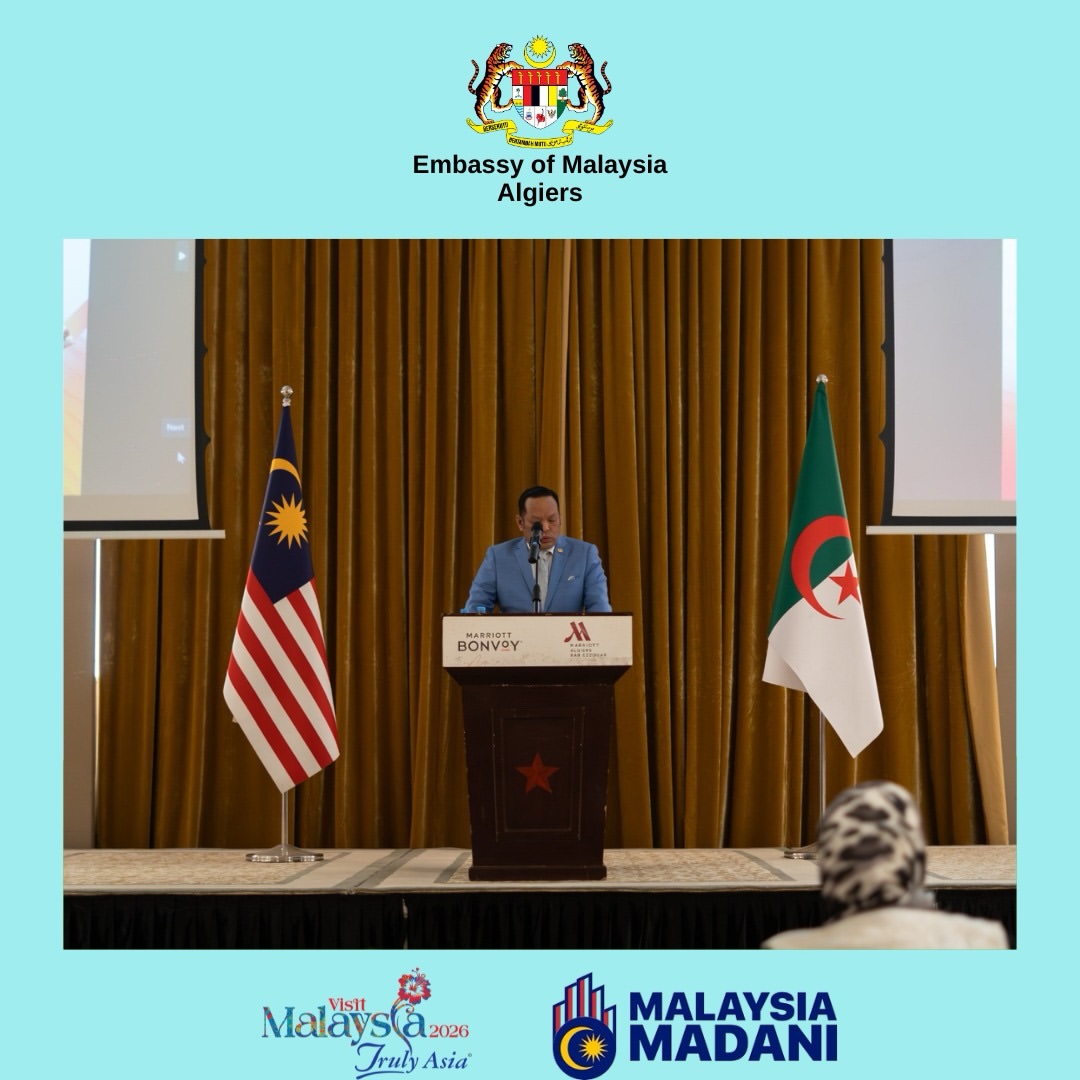
A business networking session organised by the Malaysian Embassy showed a gap between potential and actual engagement, with only four Malaysian suppliers interacting with 58 Algerian trade bodies involved in food manufacturing, imports, distribution, and processing.
Rizany Irwan said: “This indicates that Malaysia is underutilising its potential, especially its halal strengths in a fast-growing market.”
He urged future participation to expand beyond palm oil and include broader halal food sectors.
He added that Malaysia could strengthen its position by combining halal consultancy services with machinery and ingredient exports, creating a more competitive presence against established European suppliers.
Rizany also suggested that increasing participation in future editions, including Djazagro 2027, could help Malaysian firms secure deeper access to Algeria’s halal food production and distribution ecosystem.