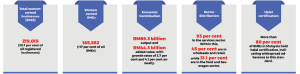

- Women-owned SMEs account for about 17 per cent of all SMEs in Malaysia, generating RM89.3 billion in output and RM44.4 billion in added value.
- Despite strong participation in halal-related sectors, women entrepreneurs face challenges such as limited access to capital, business skills, and market opportunities.
- Mentorship, digitalisation, and access to shariah-compliant financing are key enablers that can strengthen the growth of women-led halal businesses.
According to Women Leadership Foundation (WLF) Founder and Chairperson Datuk Dr Hafsah Hashim, there are more than 185,000 women-owned Small and Medium-sized Enterprises (SMEs) in the country, representing around 17 per cent of all SMEs.
Their presence is powerful in halal-aligned sectors, including food and beverages, modest fashion, cosmetics, and the wellness industry. Collectively, women-led SMEs generated a gross output of RM89.3 billion in 2022, with an added value of RM44.3 billion, growing steadily at annual rates of 3.7 per cent and 4.1 per cent, respectively.
The halal sector presents significant opportunities for women entrepreneurs. With more than 80 per cent of Malaysian SMEs already halal-certified, women-led businesses are well-positioned to capitalise on rising consumer demand for certified goods and services.
Younger women are leveraging their digital fluency to expand their reach through e-commerce platforms and strengthen their brand. However, the challenge lies in scaling up while navigating certification processes, financing, and the complexities of global expansion.
BARRIERS AHEAD
Despite this potential, women-led businesses still face structural hurdles. Limited access to capital, lack of formal business management skills, and insufficient knowledge of halal certification often hinder growth. In addition, restricted market access and slow adoption of digital tools limit expansion opportunities. Hafsah notes that bridging the gap between traditional halal practices and modern business models is essential for the long-term sustainability of women-owned enterprises.

To unlock women’s potential, Hafsah stresses the need for gender-sensitive governance frameworks. Simplifying halal certification processes, offering targeted incentives such as tax reliefs or grants, and providing tailored capacity-building programmes are some of the measures that can ensure women-led halal businesses are not left behind. Equally important is greater representation of women in policy and certification boards so that governance structures reflect diverse perspectives.
GUIDED GROWTH
Mentorship also emerges as a powerful enabler for women entrepreneurs in the halal sector. Structured programmes such as the Skills, Intelligence, Innovative, Integrity, Leadership, and Knowledge (SILK) initiative by WLF, the Women Exporters Development Programme by the Malaysia External Trade Development Corporation (MATRADE), and regional networks like the ASEAN Women Entrepreneurs’ Network (AWEN) provide access to expertise, networking, and cross-border opportunities.
“Mentorship shortens the learning curve and inspires resilience,” said Hafsah, highlighting its role in empowering women to navigate challenges more effectively.
At the same time, embracing digitalisation is crucial for competitiveness. Initiatives such as EmpowerHER Digital and eUsahawan are equipping women entrepreneurs with e-commerce skills, branding strategies, and fintech knowledge, enabling them to engage with broader markets. These tools are essential in a landscape where online platforms increasingly shape consumer behaviour.
Access to financial resources is another critical factor. Islamic finance products, such as the GO Halal Fund and the HalalBiz Programme, are designed to expand opportunities for women-led businesses through Shariah-compliant financing.
These products not only ease certification and compliance costs but also support expansion into new markets. By combining mentorship, digital readiness, and access to finance, women entrepreneurs can position themselves at the forefront of Malaysia’s growing halal economy. –