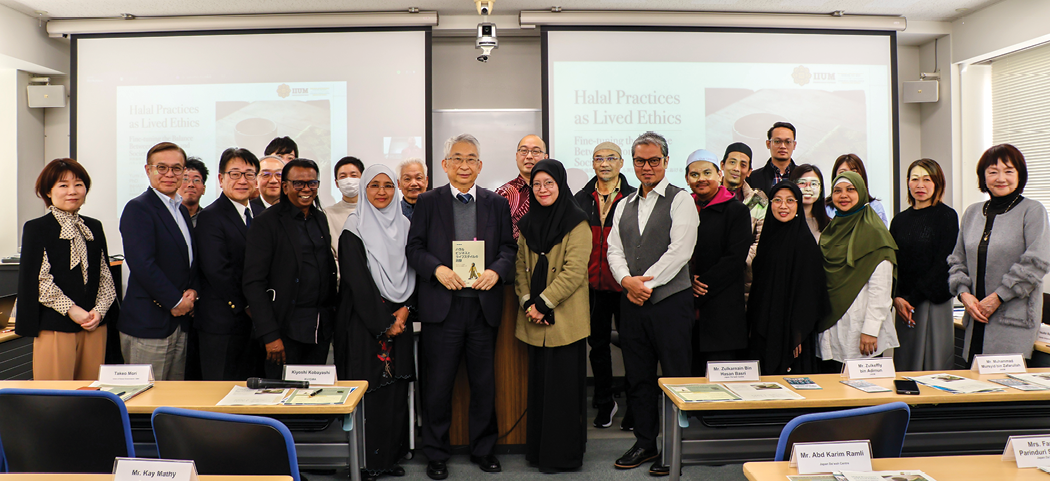
The launch of the Japanese edition of al-Basirah at Kyoto University represents a pivotal moment in the global evolution of halal knowledge.
For the International Institute for Halal Research and Training (INHART), the milestone further reflects a deliberate strategy to reposition halal as a comprehensive knowledge domain that extends beyond compliance into science, ethics, economics, and lifestyle.
Historically, halal has often been framed in religious terms, leading to a limited understanding of its relevance in daily life.
The introduction of a Japanese edition challenges this perception by extending access to a non-Muslim-majority audience.
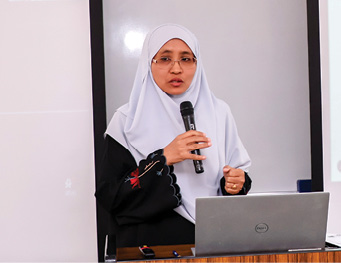
One of the editors of al-Basirah, Prof Dr Yumi Zuhanis Has-Yun Hashim, has stated that translating al-Basirah is a process of cultural localisation that ensures the content is relevant within Japan’s social and intellectual context.
“As interest in halal continues to grow, the availability of credible resources in the local language becomes increasingly important.”
The publication aims to help reduce the “fear of the unknown” and replace uncertainty with clarity, allowing businesses and policymakers to engage with halal more informedly.
BRIDGING CULTURES
This is significant in Japan, where concepts such as monozukuri (craftsmanship) and omotenashi (hospitality) are valued and align with halal principles.
Yumi explained that this publication is significant as a reference work because of its multidisciplinary approach with contributions from more than 40 scholars, covering a wide range of areas.
As one of Japan’s most respected universities, Kyoto University provides a neutral and credible platform for intellectual exchange.
“In Japan, as in many other regions, halal is sometimes perceived as exclusive or burdensome. It also sometimes is viewed solely as a religious practice rather than a system grounded in science and ethics,” Yumi explained.
BEYOND CERTIFICATION
She continues to state that these misconceptions can create barriers, particularly for businesses unfamiliar with halal requirements, and that this book’s structured approach intends to address them.

A central concept explored in the book is the relationship between halal and tayyib. Understanding these concepts together provides a more complete framework for evaluating products and services.
Moreover, this integrated perspective is relevant to Japan’s efforts to develop Muslim-friendly services.
However, readiness requires more than basic accommodation, such as pork-free menus, as it involves a deeper understanding of dietary requirements and the overall experience. The book provides a knowledge base and guides that cover the concerns.
The collaboration between INHART and Japanese institutions is expected to play a vital role in sustaining this momentum by creating opportunities for joint research and innovation in halal-related fields.
With this milestone, INHART reinforces its role as a global leader in halal knowledge while contributing to a broader transformation in how halal is perceived and applied.