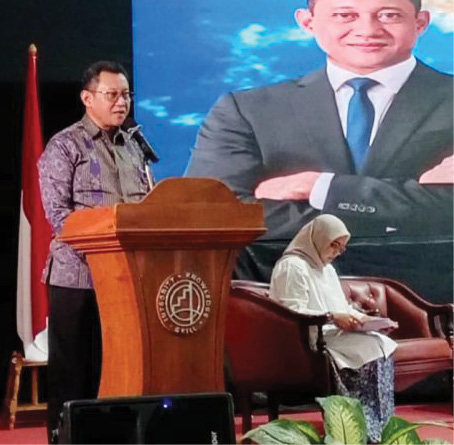
In a powerful alignment of faith and environmental action, the recent Islamic Finance Conference in Jakarta brought together stakeholders from across Southeast Asia to highlight the vital role of halal and thayyib principles in fostering a sustainable future.
Hosted by Greenpeace Indonesia under the Ummah for Earth Alliance and in collaboration with the Indonesia Banking School, the event marked the launch of the “Islamic Finance for Earth” campaign.
This initiative aims to link Islamic finance with climate solutions, encouraging ethical, environmentally responsible investment rooted in Islamic values.
“Islamic finance is more than just halal profits – it’s about generating positive social and environmental impact,” said Rahman Shofiana, Project Lead at Greenpeace Indonesia.
A key highlight of the conference was the call to channel just five per cent of the Islamic finance sector’s $4.5 trillion in assets into renewable energy. Doing so could unluck an impressive $400 billion for climate finance by 2030, according to a report co-published by Greenpeace MENA and the Global Ethical Finance Initiative.
With the Islamic finance industry projected to grow to $6.7 trillion by 2007, experts emphasised the urgent need to invest in Shariah-compliant green initiatives. “Islamic finance isn’t just an alternative system – it’s a powerful tool for climate action,” said Tariq Al-Olaimy, Islamic Finance Advisor for Ummah for Earth.
Indonesia’s success with its green sukuk programme, which prevents nearly one million tonnes of carbon dioxide (CO2) emissions annually, further demonstrates the transformative potential of Islamic finance in addressing the global renewable energy funding gap.
As a faith-based financial framework guided by halalan-toyyiban values, Islamic finance offers a holistic and ethical solution to tackle climate change while advancing the well-being of humanity and the planet.