Malaysia’s mosques are more than just religious landmarks. They reflect generations of heritage, community life and evolving Islamic architecture. Some date back centuries, while others stand out for their distinctive design or commitment to sustainability. Each carries its own story, shaped by history, people and place.
In this feature, we highlight mosques across Malaysia – each with its unique character, historical significance and connection to the communities they serve.
Masjid Jamek Muhammadi, Kelantan
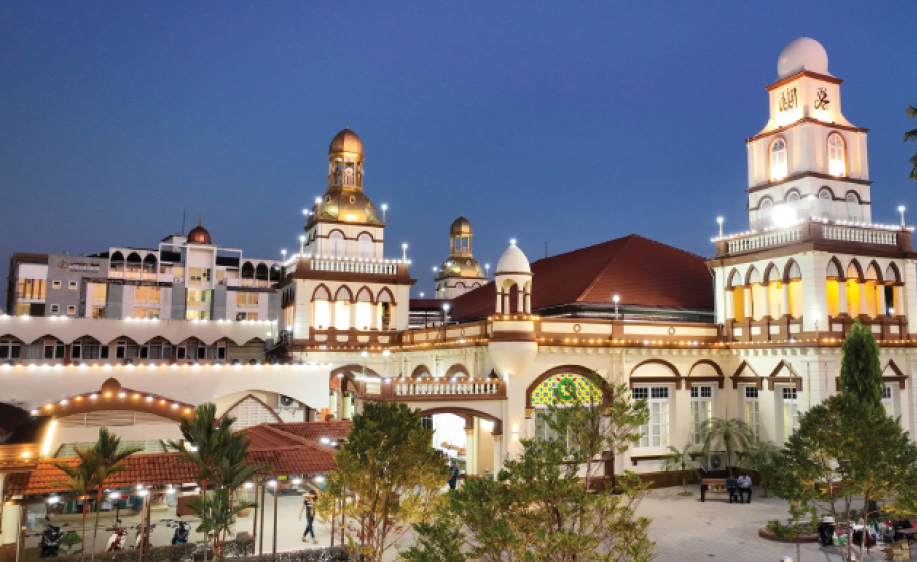
Masjid Jamek Muhammadi, also known as the State Mosque of Kelantan, stands as a prominent symbol of Islamic heritage in Kota Bharu. Initially constructed in 1867 as a wooden structure near the banks of the Budor River in Seberang Paloh, the mosque was later relocated due to frequent flooding. While the exact date of its original construction remains uncertain, historical accounts suggest it may have existed during the reign of Sultan Muhammad I (1801-1837) or, more commonly believed, during the time of Sultan Muhammad II (1837-1886).
In 1921, a new brick building was constructed to replace the original wooden mosque. The foundation stone was laid by Sultan Ismail Ibni Almarhum Sultan Muhammad IV on 21 August 1922. Covering a total area of 10,600 square feet, the mosque features four minarets, each standing at 70 feet tall. One of these minarets is fitted with four large clocks visible from every direction. The mosque can accommodate up to 2,400 congregants at one time. It was officially opened on Friday, 31 July 1931, when it was also renamed Masjid Muhammadi in honour of Sultan Muhammad IV.
Masjid Abidin, Terengganu
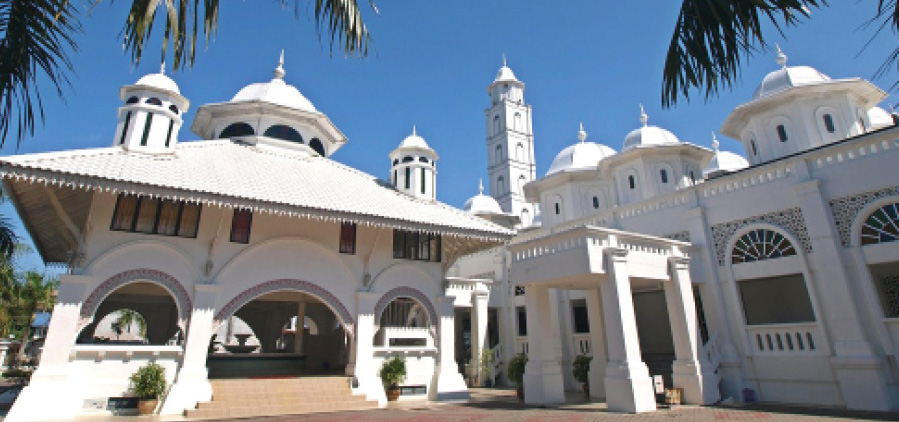
Masjid Abidin was initially constructed between 1793 and 1808 using cengal wood during the reign of Sultan Zainal Abidin II. It was later rebuilt with bricks and cement under Sultan Umar in 1852. In 1881, Sultan Ahmad II ibni Yang Dipertuan Muda Tengku Mahmud commissioned a new dome to replace the one previously built by Sultan Umar. A special ceremony was held on 1 Jamadil Akhir 1298H (1881), on a Saturday at 7.00 in the morning, where 16 ceremonial shots were fired to mark the occasion.
In 1901, during the reign of Sultan Zainal Abidin III, the mosque underwent renovation and expansion, doubling its original size to accommodate more worshippers with the addition of three new minarets. Further renovations were carried out in 1972 during the reign of Sultan Ismail Nasaruddin Shah, increasing the capacity to 2,500 congregants and adding a tall minaret to the mosque’s roof. In 2005, under the reign of Sultan Mizan Zainal Abidin, the mosque underwent another round of renovations to enhance its architectural features. The project was led by Yang Mulia Dato’ Raja Kamarul Bahrain Shah, a member of the Terengganu Royal Family.
Masjid Sultan Idris Shah II, Perak
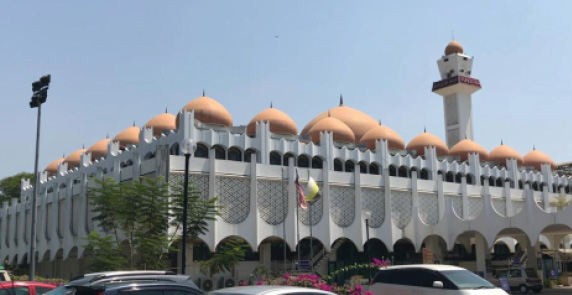
Masjid Sultan Idris Shah II, originally known as Masjid Negeri (Perak), was officially inaugurated on 15 September 1978 by Sultan Idris Iskandar Shah II in conjunction with celebrations marking his 54th birthday. Located on approximately 2.6 hectares of land in the heart of Ipoh, the mosque is strategically positioned near the Ipoh Railway Station, the Ipoh District Police Headquarters, the Sharia Court, the High Court, and the city’s main bus terminal.
The initiative to construct the mosque was proposed by the late Orang Kaya-Kaya Panglima Bukit Gantang Seri Amar Diraja Abdul Wahab, former Chief Minister of Perak. He identified the need for a larger mosque, as the existing ones in Ipoh could no longer accommodate the growing number of worshippers during Friday prayers and major Islamic festivals. Construction began on 16 May 1966, with the foundation stone laid by the late Tun Haji Abdul Razak, then Deputy Prime Minister, on 27 October 1967. The building was completed on 26 August 1968, providing the city with a significant centre for worship and religious activity.
Masjid Tengku Mahkota Tengku Hassanal Ibrahim Alam Shah, Pahang
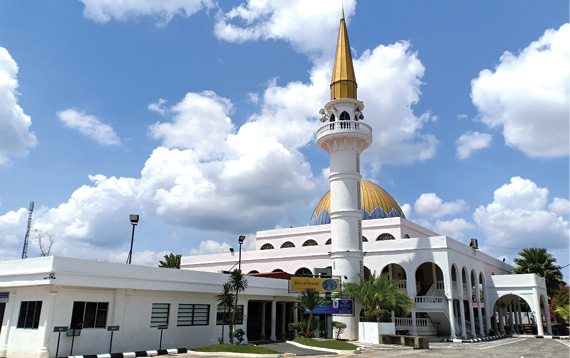
Masjid Tengku Mahkota Tengku Hassanal Ibrahim Alam Shah, situated in Taman Temerloh Jaya, was previously known as Masjid Taman Temerloh Jaya and is commonly referred to as MTTJ. The mosque began operations in July 2010 and can accommodate up to 600 worshippers inside, with additional space for 600 more in its courtyard. On 20 April 2023, it was officially renamed and inaugurated by Tengku Mahkota Tengku Hassanal Ibrahim Alam Shah Ibni Al-Sultan Abdullah Ri’ayatuddin Al-Mustafa Billah Shah, the Regent of Pahang.
On 6 July 2024, MTTJ was designated the first Green Mosque in Pahang under the Rumah Ibadat Hijau (RIH) programme. The mosque now leads by example in environmental stewardship, incorporating energy-efficient technology, water conservation measures and sustainable waste management.
Masjid Wilayah Persekutuan, Kuala Lumpur
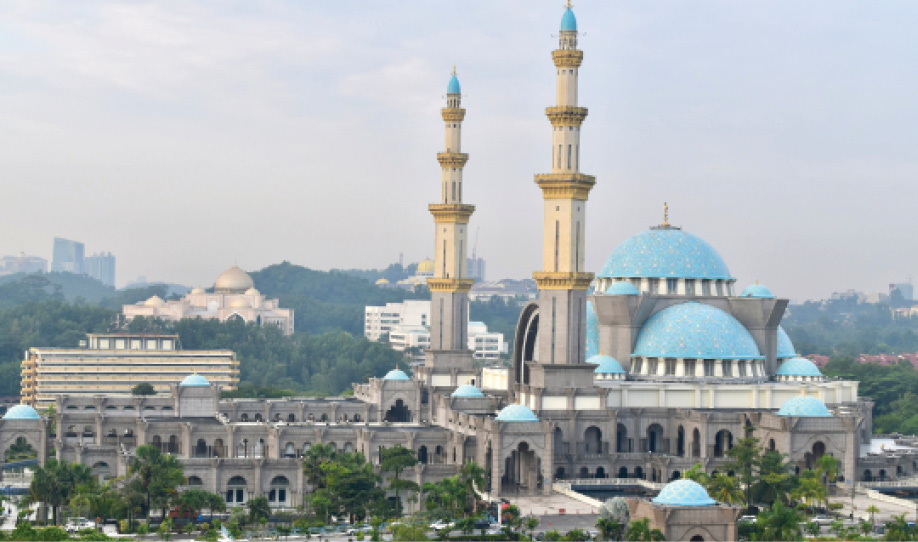
Masjid Wilayah Persekutuan, administered by the Federal Territories Islamic Religious Department, was constructed in 1997 and completed in 2000. Built on a 13.4-hectare site, it features a total floor area capable of accommodating up to 17,000 worshippers at any one time, making it the largest mosque ever built in Malaysia’s history.
The mosque’s architecture is a sophisticated fusion of Turkish and Nusantara civilisations, blending classical and modern Islamic aesthetics into a high-quality architectural masterpiece. Its domes are particularly striking, comprising a central dome, semi-domes, smaller domes and a vault, totalling 22 domes overall.
The central dome spans 30 metres in diameter and rises 45 metres above At the heart of the complex lies the Laman Hidayah, an open courtyard designed for spill-over prayer activities and open interaction. The mosque’s landscaping enhances its ‘Mosque within a Garden’ concept by combining forest, recreational and medicinal garden themes with water features that cool and calm the surrounding environment.
Functioning as more than a place of worship, the mosque serves four key purposes — a centre for worship, knowledge, community and tourism. It offers daily congregational prayers, religious classes, and a variety of community engagement programmes, firmly positioning it as a symbol of Islam’s holistic, comprehensive and inclusive nature.