Malaysia’s halal industry is entering a decisive phase, with the National Halal Policy (NHP) now in its final stages and set to be completed by May.
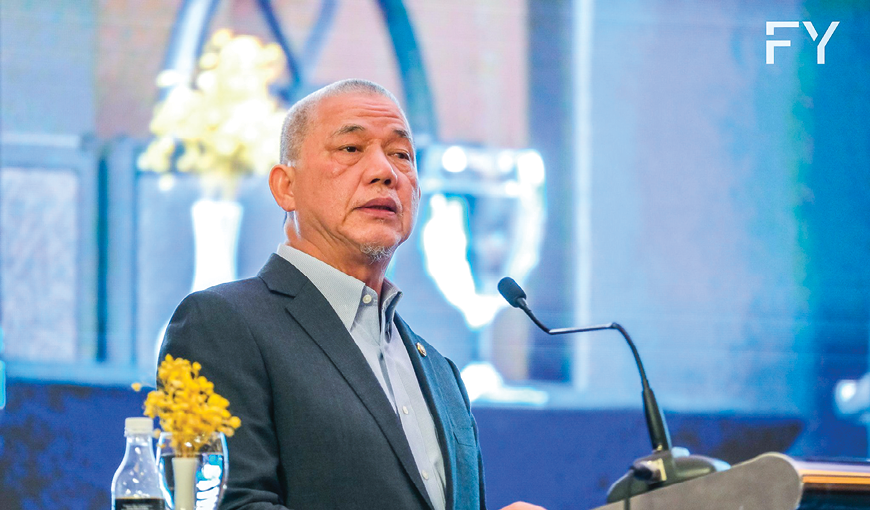
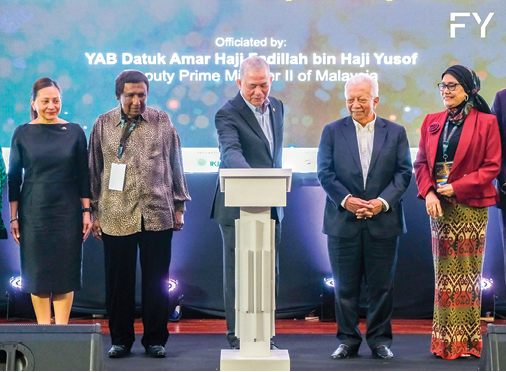
Announced by Deputy Prime Minister Fadillah Yusof at the opening of the International Halal Economic Conference (IHEC) 2026, the policy is poised to chart a clearer and more sustainable course for one of the country’s most vital economic sectors.
Speaking at the conference, Fadillah underscored that the government had agreed to develop the NHP as a comprehensive framework to guide Malaysia’s halal ecosystem. The policy is designed to foster an inclusive, structured, and sustainable industry while preserving the authority of existing certification bodies, such as the Department of Islamic Development Malaysia and state Islamic religious councils.
Rather than replacing current systems, the NHP will function as a strategic guide, aligning stakeholders, strengthening governance and ensuring the ecosystem evolves without compromising established standards.
Malaysia has long been recognised as a global halal leader, and the forthcoming NHP 2025-2035 is central to maintaining that position. The initiative reinforces standards and enforcement and outlines an action plan for broader industry development from 2025 to 2030.
THREE PRIORITIES
Looking ahead, the government has identified three key priority areas to drive the next phase of development within the halal industry.
The first centres on strengthening certification pathways for small and medium enterprises (SMEs), ensuring that smaller players can access and benefit from halal certification more efficiently.
The second focuses on improving certification systems and enhancing mutual recognition across borders, moves expected to facilitate international trade.
The third priority involves reinforcing halal clusters to create stronger, more integrated industry networks.
STRONG ECONOMIC CONTRIBUTOR
The significance of the halal sector to Malaysia’s economy continues to grow. Fadillah highlighted that, as of the third quarter of 2025, the industry accounted for 7.94 per cent of the country’s gross domestic product (GDP), equivalent to RM118.2 billion.
There are now 1,525 registered halal exporters, reflecting increased sector competitiveness and global growth.
EXPANDING ACCREDITATION
Efforts are also underway to broaden the scope of accreditation within Malaysia’s halal certification system. Following JAKIM’s successful attainment of ISO/IEC 17065 accreditation in 2019, the government is now working to extend this recognition to state Islamic religious councils and departments.
This move is expected to strengthen institutional capacity and enhance confidence in Malaysia’s certification processes, both domestically and internationally.
While Malaysia’s halal certification system is widely recognised, supported by policy stability and strong institutional governance, Fadillah emphasised that continued progress will depend on sustained policy leadership, innovation and strategic investment. He also highlighted the importance of deeper cross-border collaboration to keep pace with evolving global demands.
SHAPING THE FUTURE
The IHEC 2026 serves as a key platform for dialogue on the future of the halal economy. It brings together stakeholders to discuss improvements to existing systems and explore ways to develop the entire halal value chain in a more integrated manner.
Fadillah expressed hope that insights and feedback gathered during the conference would contribute meaningfully to policy refinement. These inputs will be shared with Deputy Prime Minister Ahmad Zahid Hamidi, who chairs the Cabinet Committee on Halal Certification and Industry.
As Malaysia moves closer to finalising the National Halal Policy, the emphasis is clear: building a resilient, forward-looking halal ecosystem that balances tradition with innovation, ensuring the nation remains at the forefront of the global halal economy.